
The challenge
Viva Phonics is a research-based reading program run by teacher Angelica Lima. Trained tutors teach children one-on-one, online, several times a week, at times that suit each family.
The whole business ran on one Google Sheet: every student, every tutor's free half-hour slots, who teaches whom and when, payments through PayPal and Stripe, tutor pay and profit. As the program grew, the sheet became hard to keep right. When a student paused, the tutor's free time and pay had to be fixed by hand, and nobody could see at a glance how the business was doing.
What we built
We started in June 2024 from Angelica's sheet. We mapped how she worked, designed every screen in Figma, then built the app in React and Node.js, module by module:
- Students. Profiles with start and end dates, where each family came from, and pauses or extensions. A paused schedule frees the tutor's slots and updates pay on its own.
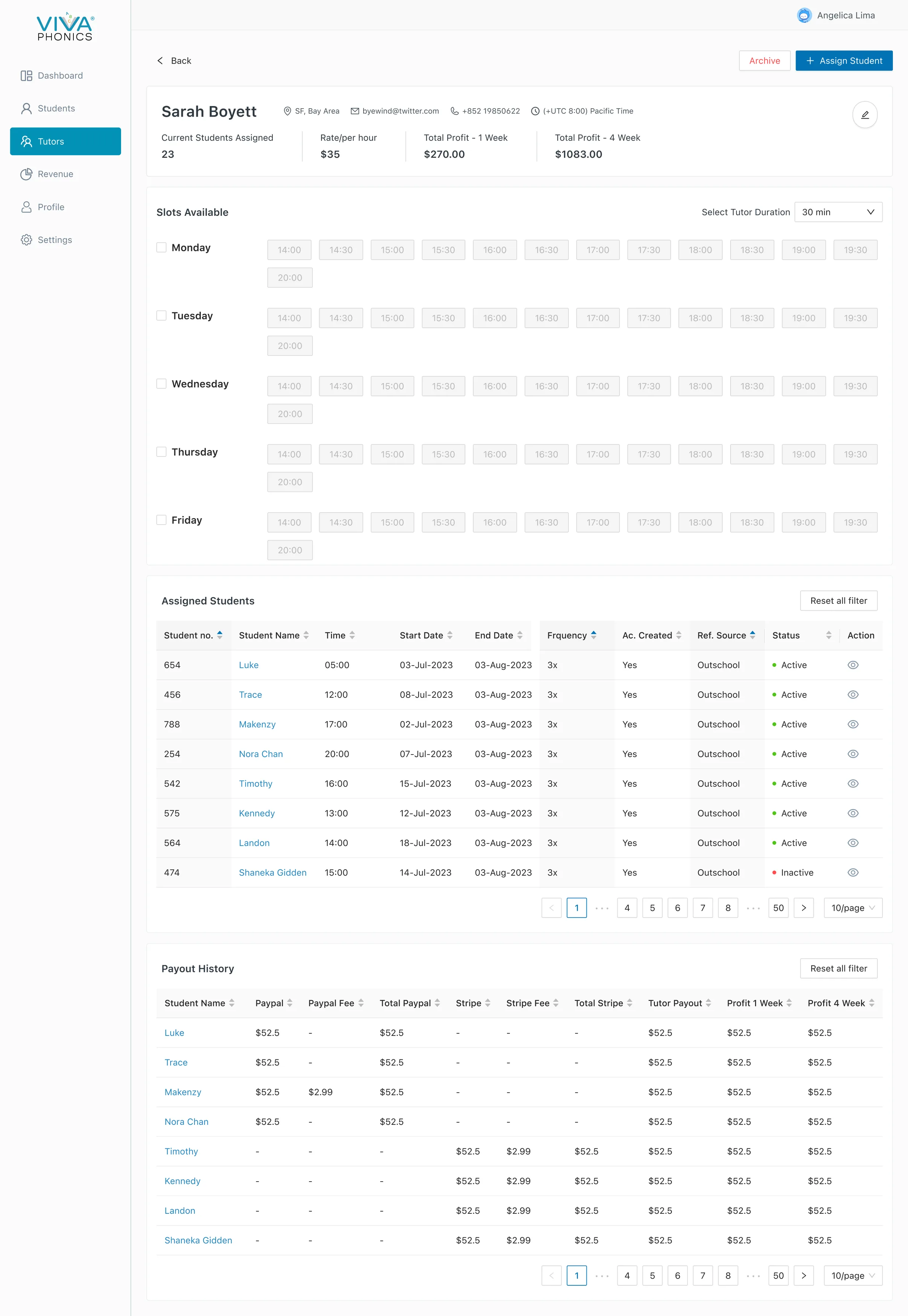
- Tutors. Profiles with rate per hour, time zone and weekly free slots, the students they teach and their payout history.
- Assigning a student. Pick the tutor and lesson length, then tick the open half-hour slots for each weekday; slots already taken are greyed out, so no one is double-booked.
- Revenue and payouts. Every PayPal and Stripe payment with its fee, the tutor's payout and the profit per student, for one week and for four.
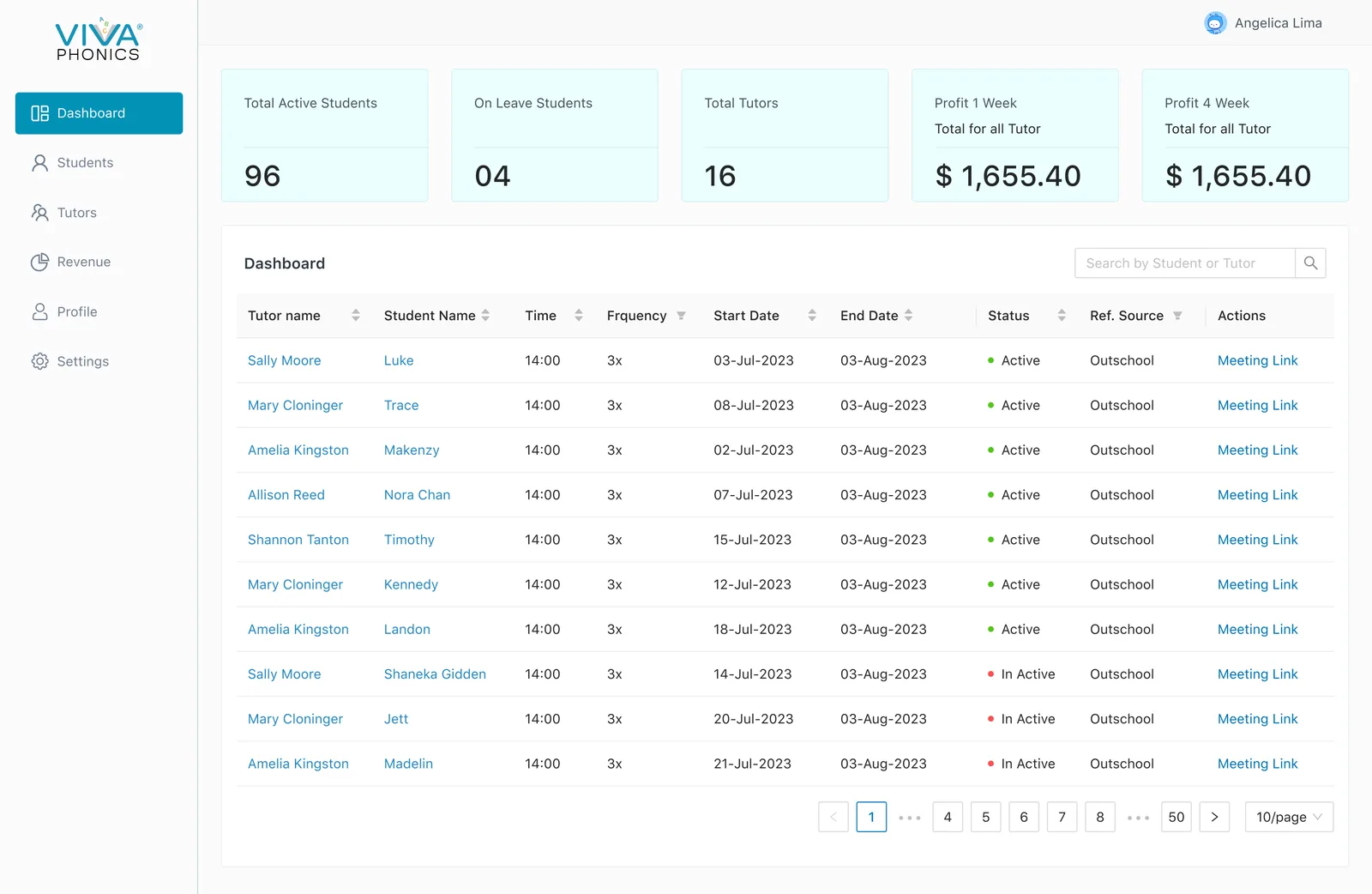
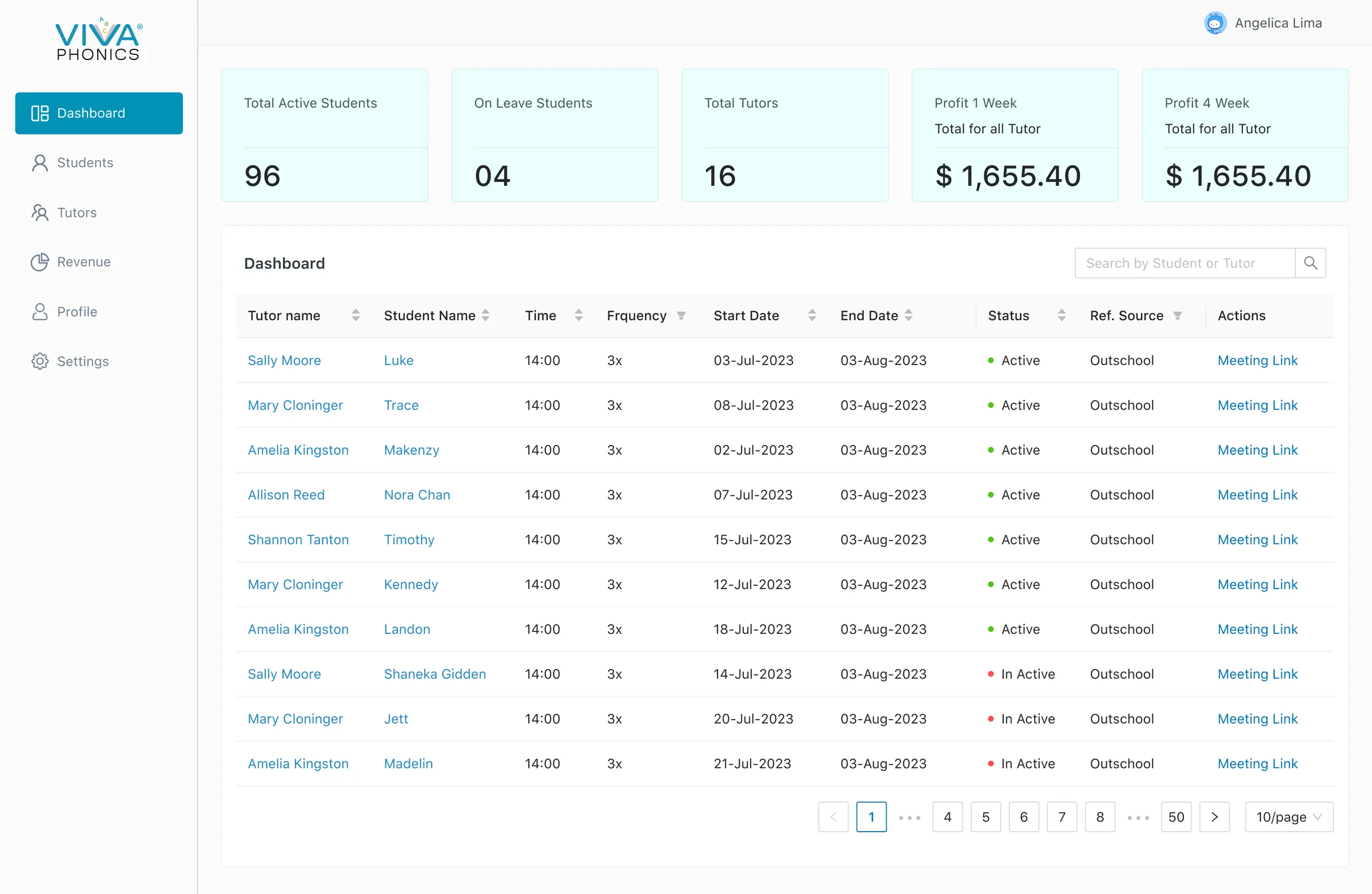
- A dashboard. Active students, students on leave, tutors and profit at the top, every lesson underneath, with filters such as monthly enrollment.
In 2026 we made the changes Angelica asked for next, then moved the code, hosting and data into Viva Phonics' own accounts, so the business owns its platform outright.
The results
Viva Phonics now runs students, tutors and payouts in one app instead of a spreadsheet. A pause or a new assignment updates availability and pay by itself, and weekly and four-week profit sits on the dashboard instead of in a formula.